Home
- Programs
Computer Science and Engineering
Started in 2008, the Computer Science & Engineering (CSE) department at Ashoka Women’s Engineering College equips students with strong technical foundations and future-ready skills. Over the years, the department has grown significantly with a current intake of 180 students and a commitment to excellence in teaching, learning, and research.
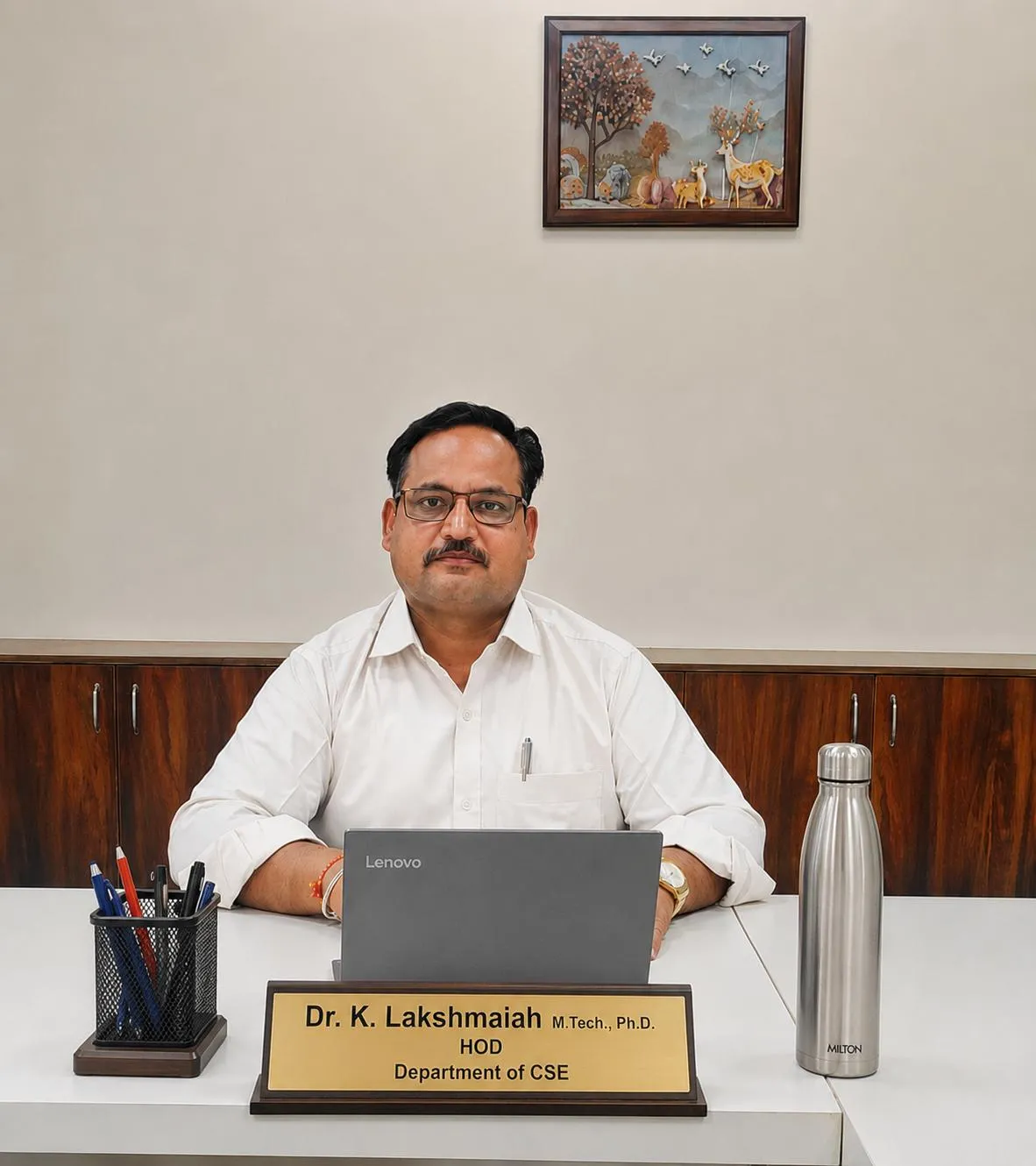
Head of the Department
Dr. K. Lakshmaiah is a distinguished academician, researcher, and administrator with over 23 years of teaching and academic experience in Computer Science and Engineering. He holds a Ph.D. in Computer Science and Engineering from JNTUH, Hyderabad, along with an M.Tech. in Computer Science and Engineering from Satyabhama University, Chennai. He has served in various prestigious institutions as Professor, Associate Professor, and Head of the Department, contributing significantly to academic excellence, research, and institutional development.
His research interests include Artificial Intelligence, Machine Learning, Data Mining, Spatial Databases, and Advanced Computing Technologies. He has published several research papers in reputed Scopus-indexed journals and international conferences, holds multiple patents, and actively contributes as a reviewer for international journals. He has also organized and coordinated Faculty Development Programs (FDPs), workshops, and national-level academic events in emerging technologies.
Apart from academics and research, Dr. K. Lakshmaiah actively promotes student-driven learning initiatives through hackathons, coding competitions, CodeGen programs, technical workshops, seminars, industrial visits, innovation challenges, project expos, and hands-on training sessions. He strongly believes in experiential and industry-oriented learning methodologies that enhance students’ technical skills, creativity, problem-solving abilities, and career readiness. His dedication toward mentoring students and fostering innovation-driven education makes him a valuable contributor to engineering education and research.

Dr. K. Lakshmaiah
Head of Department - Computer Science & Engineering
Curriculum Structure
Focus on Innovation, Software, and Problem Solving
The CSE curriculum follows JNTUA regulations and blends foundational knowledge with practical application. Students gain expertise in core computer science areas while developing industry-aligned skills.
Key Learning Areas Include:
Programming Fundamentals and Data Structures
Operating Systems and Database Management
Web Technologies and Cloud Computing
Advanced Computing with AI, ML, and Software Systems
Real-World Project Development
Students are encouraged to participate in technical events, workshops, and collaborative team projects to enhance analytical thinking and real-world readiness.
Program Objectives
Preparing Women for Excellence in Computing
Develop strong professional and technical skills
required for careers in
computer science and related
technology fields.
Equip students with the ability to solve real-world computing problems using analytical thinking, programming knowledge, and modern engineering tools.
Encourage graduates to become competent professionals who communicate effectively, collaborate in teams, and demonstrate leadership in their careers.
Enable students to adapt to rapidly evolving technologies through continuous learning and professional development.
Promote ethical responsibility and social awareness, ensuring graduates contribute positively to society while applying technology responsibly.
Placement Highlights
Ashoka Women’s Engineering College is widely recognised for its strong placement support and industry engagement.
CSE students benefit from programming training, aptitude preparation, and interview readiness delivered by the Training & Placement Cell. The focus on practical learning and communication skills helps graduates secure opportunities with leading IT recruiters across India.
FAQs
1. What degree does the Computer Science & Engineering department offer?
The department offers a B.Tech degree in Computer Science & Engineering under JNTUA.
2. Is the curriculum industry-aligned?
Yes. The curriculum blends foundational computing knowledge with practical projects, labs, and emerging technology exposure.
3. What labs are available for CSE students?
CSE students access Programming, OS/DBMS, Cloud Computing, DWDM/Mobile Development, ELCS, and Projects labs.
4. Can CSE students participate in research and events?
Yes. The department organises workshops, guest lectures, and technical events that promote research and professional growth.
5. How does the department support placements?
Through training in technical skills, communication, and interview readiness via the Training & Placement Cell.
6. What careers can CSE graduates pursue?
Careers in software development, data science, AI, cloud technologies, IT consulting, and research.
7. Does the department collaborate with industry?
Yes. CSE has MOUs with industry partners to enhance practical exposure and professional opportunities.